
Zones of Regulation
Self-regulation is something we all continually work on, whether we are aware of it or not. We encounter circumstances sometimes that call for us to self-regulate. If we are able to recognize when we are becoming less regulated, we are able to use strategies to feel better and get ourselves to a better place. This comes naturally for some, but for others it is a skill that needs to be taught and practised. This is the goal of The Zones of Regulation.
By addressing different areas of emotional and sensory regulation, executive functioning, and social cognition, the curriculum is designed to help move students toward independent regulation. The Zones of Regulation incorporates Social Thinking® concepts and numerous visuals to teach students to identify their feelings/level of alertness, understand how their behaviour impacts those around them, and learn what tools they can use to manage their feelings and states.
At Nearnung Primary School, we have implemented the Zones of Regulation across the school as a strategy to assist our students in developing skills to maintain and improve their well-being.
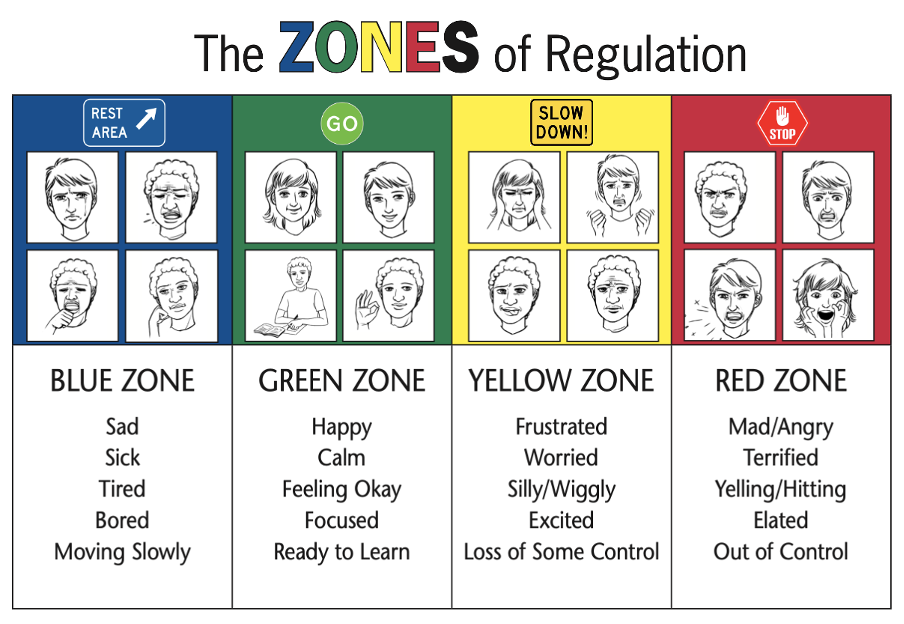
The Zones of regulation categorises states of alertness and emotions into four coloured zones:
The Blue Zone: Low states of alertness, such as sad, sick, tired or bored. The body and/or brain is moving slowly or sluggishly.
The Green Zone: A regulated, in control state of alertness that students generally need to be in for schoolwork and being social.
The Yellow Zone: A heightened state of alertness. A person may be experiencing stress, anxiety, frustration or excitement, and become wiggly, squirmy or sensory seeking. The Yellow Zone is starting to lose control.
The Red Zone: Extremely heightened states of alertness or very intense feelings, such as anger, rage, panic or elation. Being in the Red Zone is best explained as not being in control of one’s body.
Everyone experiences all of the Zones at one time or another.
What can you do to support the Zones of Regulation at home?
- Identify your own feelings using Zones language in front of your child (e.g. “I’m feeling frustrated because….. , I am in the Yellow Zone.”)
- Talk about which tool you will use to be in the appropriate Zone (e.g., “I’m going to go for a walk as I need to get to the Green Zone.”)
- Provide positive reinforcement when your child is in the Green Zone and if they make efforts to stay in the Green Zone. E.g., “I can see you are working really hard to stay in the Green Zone by…”
- Label which Zones your child is in throughout the day (e.g., “You look sleepy, I wonder if you are in the Blue Zone?”)
- Teach your child which Zone tools they can use (e.g., “It’s time for bed, let’s read a book together in the rocking chair to get to the Blue Zone.”)
- Explore sensory ideas to help your child feel calmer will also support them regulate their emotions. Some children find colouring, play dough, using stress balls, time at the park or reading beneficial. You could also try using relaxing music, children’s yoga for deep breathing exercises or mindfulness.
© Nearnung Primary School